
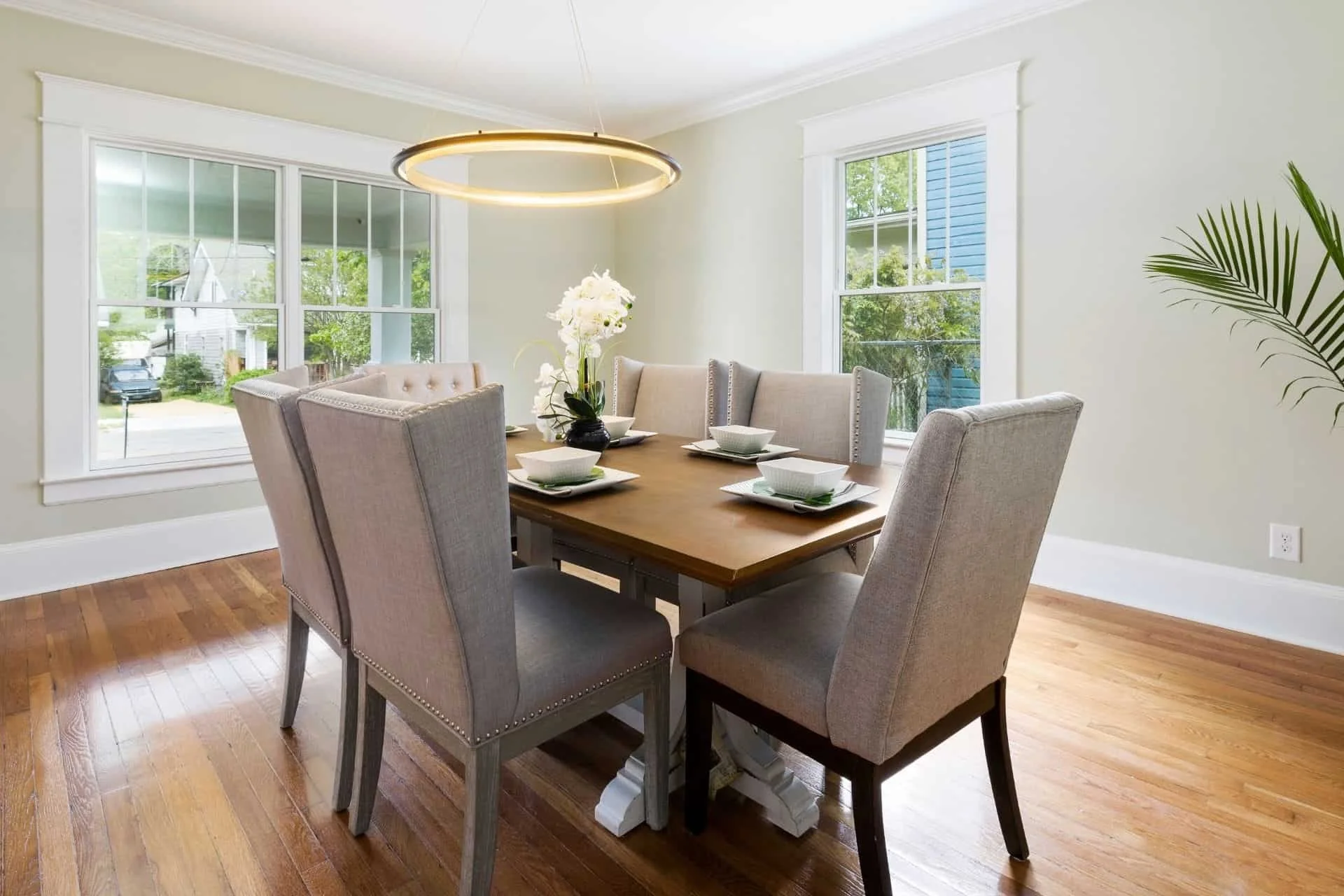
The dining room is one of the most underinvested spaces in most homes. It gets used for meals, gatherings, and celebrations, but when it comes to storage and design, it often gets left with a table, some chairs, and not much else. For homeowners along the North Carolina coast who entertain regularly and want a dining room that works as well as it looks, custom built-ins are the upgrade that changes everything.
The best custom built-in ideas for a dining room include a built-in buffet or sideboard, a china cabinet or display wall, a built-in bar or beverage station, and a window seat with storage underneath. Any of these can stand alone or be combined into a single cohesive wall of cabinetry that makes the dining room feel purpose-built from the ground up.
Why Are Custom Built-Ins Worth It in a Dining Room?
The dining room does more work than most homeowners give it credit for. It stores serving dishes, glassware, linens, and entertaining supplies. It displays cherished pieces and family heirlooms. It stages food and drinks before and during gatherings. And it does all of this while also being the backdrop for every meal, holiday, and celebration the household hosts. Without proper storage built into the room itself, all of that function gets pushed onto sideboards that don't quite fit, china cabinets that crowd the space, and cabinets borrowed from other rooms.
According to Circana's 2024 home entertaining report, kitchen and dining furniture sales are growing, bolstered by a renewed focus on home gatherings, part of a broader cultural shift toward Americans entertaining close friends and family at home more than ever. For homeowners in Wilmington, Leland, and Southport who love to host, that trend makes a well-designed dining room one of the smartest investments in the home.
What Is a Built-In Buffet or Sideboard?
A built-in buffet or sideboard is one of the most functional and universally applicable dining room built-ins. It sits along one wall at counter height, providing a dedicated staging surface for food and drinks during gatherings, and enclosed storage below and above for everything the dining room needs to hold.
Unlike a freestanding sideboard, a built-in version is designed precisely for the wall it occupies, which means no awkward gaps at the sides, no visible backs, and no pieces that look like they were chosen because they were close enough. The base cabinets handle serving dishes, table linens, and entertaining supplies. A countertop above gives guests a place to serve themselves buffet-style without crowding the table. Upper cabinets or open shelving above the counter display glassware, collectibles, or seasonal decor.
For families throughout Hampstead and the surrounding communities who host Thanksgiving, Christmas, and large gatherings throughout the year, a built-in buffet transforms the dining room from a space that has to be improvised into one that is always ready.
What Is a Built-In China Cabinet or Display Wall?
A built-in china cabinet or display wall takes the concept of the freestanding china cabinet and integrates it permanently into the architecture of the room. The result is a piece that feels like it has always been there rather than something that was moved in from another house.
The most effective version combines glass-front upper cabinets for displaying china, crystal, and decorative pieces with solid lower cabinets for concealed storage. Interior lighting inside the upper cabinets adds warmth and showcases what is on display without requiring the overhead light to do all the work. The whole piece reads as a designed element of the room rather than furniture sitting against a wall.
For dining rooms in older coastal NC homes with high ceilings and original architectural details, a floor-to-ceiling display wall built in the same spirit as the room's existing character adds presence and permanence that no freestanding piece can replicate.
What Is a Built-In Bar or Beverage Station in a Dining Room?
A built-in bar or beverage station in the dining room is a different proposition than one in the living room. In the dining room, the bar is designed to support the meal itself rather than pre-dinner drinks in a separate space. It keeps wine, glassware, and serving pieces within arm's reach of the table without requiring trips to the kitchen, and it gives guests a dedicated destination for refills without disrupting the flow of the meal.
A dining room bar built-in typically includes open shelving for glassware, closed cabinetry for bottles and bar supplies, a small countertop for prep and pouring, and sometimes a wine rack or small refrigerator compartment. When it is part of a larger wall of cabinetry that also includes a buffet or display cabinet, the whole piece functions as a complete dining room storage system rather than a collection of separate furniture.
According to Kitchen and Bath Design News citing Houzz research, more than two-thirds of homeowners use their kitchens for entertaining after a renovation, with homeowners increasingly adding butler's pantries and beverage stations to support that function. Bringing a version of that beverage station into the dining room itself takes the entertainment experience one step further.
What Is a Window Seat Built-In in a Dining Room?
A window seat with built-in storage underneath is one of the most charming and underutilized built-in ideas for a dining room. It adds casual seating along one wall, creates a natural gathering spot before or after a meal, and provides concealed storage in a spot that would otherwise contribute nothing to the room's function.
In coastal NC dining rooms where natural light is a priority and windows are a focal point, a window seat frames that view and makes it part of the room's character. The storage below is ideal for table linens, seasonal decor, or entertaining supplies that are used regularly but don't need to be on display. The cushion can be upholstered to complement the room's existing palette, and the base cabinetry can include drawers, lift-top storage, or cabinet doors depending on what the household needs most.
How Do You Mix Open and Closed Storage in a Dining Room Built-In?
The same 60/40 rule that applies to living room and home office built-ins applies equally in the dining room. Roughly 60 percent closed storage and 40 percent open display keeps the room looking intentional over time rather than cluttered. The closed sections handle the things that need a home but not an audience. The open sections hold what you want to see and what adds character to the space.
In a dining room, the open sections typically display china, glassware, decanters, and decorative objects. The closed sections hold everyday serving pieces, table linens, candles, and the things that come out for gatherings but don't need to be visible between uses. Getting that balance right is what makes a dining room built-in feel like a design feature rather than a storage solution.
Ready to Add Custom Built-Ins to Your Dining Room?
At Carolina Custom Closets, our experienced design team has been creating custom built-in storage solutions for homeowners across Wilmington, Leland, Southport, Hampstead, and the surrounding coastal communities for over 20 years. Every project is fully custom, manufactured right here in North Carolina, and backed by a lifetime warranty and our best price promise. Our in-house team handles every project from design through installation with no outside contractors.
Our highly rated team is ready to help you design a dining room that works as well as it looks. Contact us today to schedule your free in-home design consultation.
Frequently Asked Questions
-
The most popular and functional options are a built-in buffet or sideboard for staging and storage, a china cabinet or display wall for showcasing cherished pieces, a built-in bar or beverage station for entertaining, and a window seat with storage underneath. These can be designed individually or combined into a single wall of custom cabinetry.
-
The terms are often used interchangeably. Both refer to a counter-height built-in along one wall of the dining room that provides a staging surface above and enclosed storage below. The distinction is mostly stylistic, with buffets often being slightly more formal and sideboards slightly more casual, but the function is the same.
-
Closed cabinets in a dining room built-in are ideal for serving dishes, table linens, candles, entertaining supplies, and seasonal decor. Items that are used regularly but don't need to be on display belong behind closed doors, which keeps the room looking organized between gatherings.
-
Yes. Custom built-ins are permanent architectural features that add both function and visual appeal. In a dining room specifically, they signal that the space was designed for entertaining and everyday living, which is a meaningful differentiator in coastal NC markets where home gatherings are a central part of the lifestyle.
-
The process starts with a free in-home consultation where a designer measures the space and discusses your goals. A custom design and pricing are presented before any work begins. Installation is completed by an in-house team, and the full timeline from consultation to completion varies by project scope.